From Shelter Dog to Service Dog!
Updated: Jul 28

Today marks exactly two years since our first official “shelter dog” was placed as a service dog. While many of our graduated teams had been from rehome situations, Dex was our first shelter pull that made it to graduation. Happy Gotcha Day, Dex!
Dex kickstarted a great program that has grown quite a bit since his time with us. We now run this program partnering with a few local shelters, and a larger service dog program that is piloting their first Shelter Dog to Service Dog program. Each of our goals are to show how resilient, intelligent and capable shelter dogs are!
We could easily get into the deep discussion about sourcing service dog prospects and write blog after blog about if puppies are better than starting with adults; well-bred dogs or shelter dogs. But here’s the thing, there is risk involved with all of it. Every single option has the potential to have dogs wash out due to health issues, behavior issues or just because they aren’t enjoying their job. Each person, program and donor should have the right to support what options they want. Here at Medi-Dogs, we offer all of these options so that everyone can choose their preferred route.
It is no small feat for a shelter dog to graduate from service work. Shelter and rescue dogs are not a typical way for a program to source dogs, and it used to be commonplace to believe that a dog couldn’t become a service dog later in life. I once worked for a program that told me that a dog started beyond puppyhood would not want to “work” and would fail service work. That didn’t align with what I knew about dog training, and turns out was just their own set of unfounded beliefs. Dogs can learn all of the needed skills later in life, and even if they come from a rescue situation.

Not every rescue dog is the right fit for service work. While we are capable and willing to work through some issues, it is important that the dog would be happy and comfortable working. This is an important piece that we take into account for every team, but is especially important when working with dogs that may have not been socialized well or had trauma in their past. We do not want to ask a dog to work in a situation that would be scary to them. Rescue dogs are carefully selected through partnerships with local shelters and rescues. Their teams identify dogs that have lots of food drive, appropriate energy levels, between 6 months and 3 years old and an overall confident disposition. Our team goes in, meets the dog and does additional testing to determine if they are a good fit. If so, they join the program and begin training after some initial decompression time. These dogs are incredibly resilient and show us that no matter where you start, you can always change your story. We appreciate to no end the work that our local shelters do that make this possible.

Our promise to each of these dogs is that we will find them their forever home. Sometimes this is harder than others, as not every dog we pull ends up being right for service work. Dogs in shelters are under immense stress and may end up with a different temperament than we initially experienced. This is all normal, and part of it. Some dogs are placed with the option to do Public Access Skills where they can go in public spaces with their handler. Others are not comfortable with going in public, so are placed as At-Home Service Dogs. If the dog finds tasking stressful, they go to a pet home. All of the homes are valuable and wonderful places for a dog to end up.
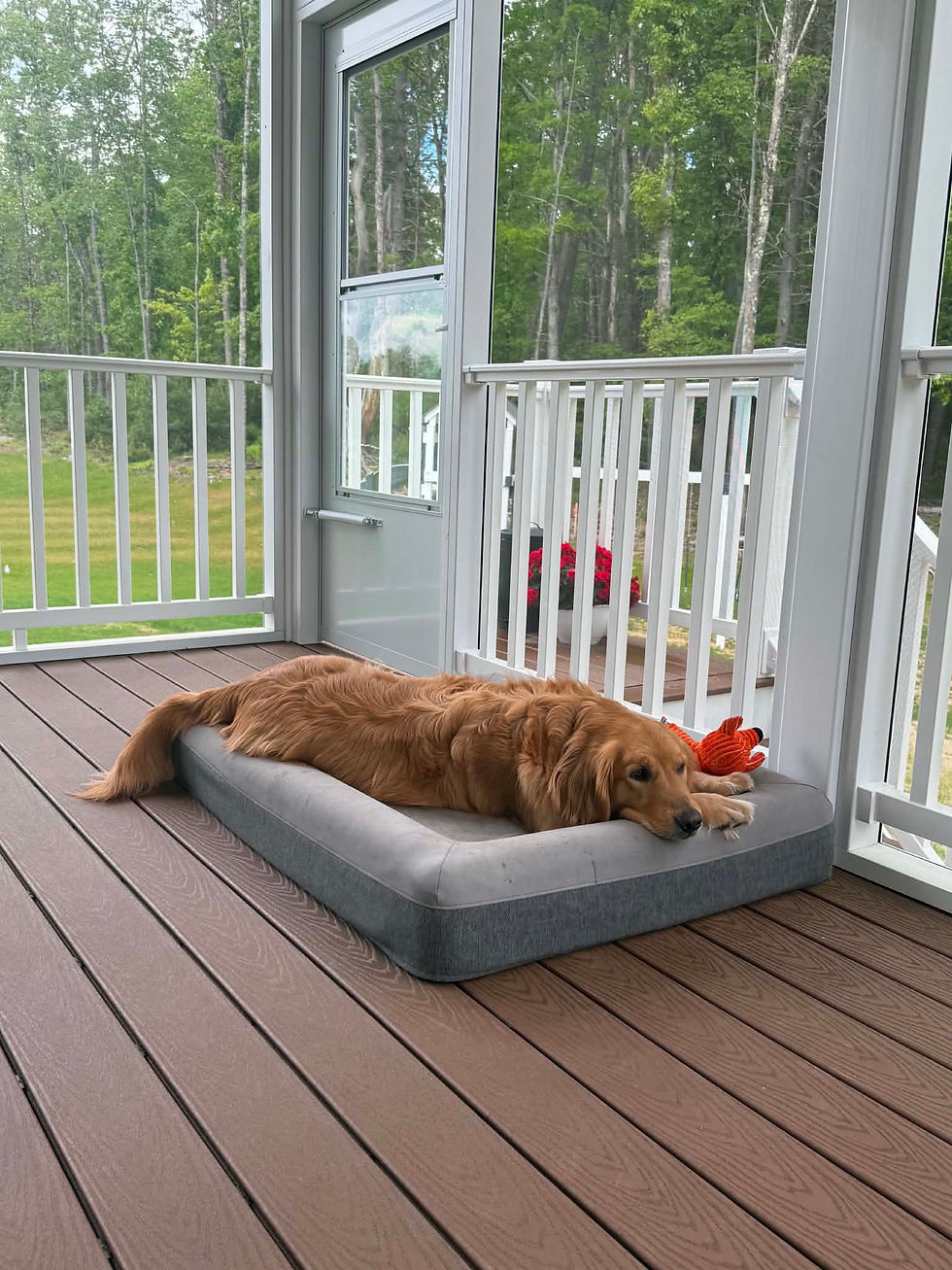
We are so glad to share that Mr. Dex is still loving his home 2 years later. They recently moved from Boston to Saratoga, NY where he has a backyard to call his own! He loves his handlers two kids (pictured with Dex above), and lounging on the screened in porch. He continues to do his tasks well, and is a cherished member of the family. We couldn't be happier for Dex and his family!
For many dogs, this journey is just starting. We are always recruiting and searching shelters for our next prospect. Continue reading to learn more about some of our other "Shelter Dog to Service Dog" Teams.
Read more about some of our Shelter Dog to Service Dog teams that have joined us after Dex:

Bumble is one of Mt. Horeb School Districts on site Therapy Dogs. She assists her handler, a Paraprofessional, with kiddos that need more support in the classroom and beyond!

Ope is a Diabetic Alert Dog for Toby. Toby handles Ope in school and in his extracurriculars. Ope and Toby love to play fetch together!

Bluey is a Diabetic Alert Dog for Kai. Bluey not only alerts to highs and lows, she also helps keep Kai calm and regulated. Kai loves to snuggle with Bluey.

Udon (previously Benny) will be a medical alert dog for Cassy as he just finished his placement last week. He retrieves items she drops and is learning medical alerts. He loves to play with the resident dog, Charlie.

Kat is our newest recruit! She joined us last week from Shelter from the Storm and is showing us all her skills. She is incredibly confident, food motivated and has yet to opt out of trying a new experience. She's been bike riding, playing in the park and meeting new friends. We are excited to see where all she goes. Won't you help support her future?


Comments